Ever watched a commercial with a beach sunset so perfect it felt suspicious? Or a car gliding through a futuristic city, shot with cinematic flair that screams “big budget”? Chances are, it wasn’t shot on a tropical island or downtown Tokyo. It was filmed in a studio, surrounded by LED walls, running on real-time rendering magic, inside a virtual production stage.
This isn’t science fiction anymore. It’s the new face of commercial video production services and cinematography, borrowing some of Hollywood’s best-kept secrets and turning them into everyday tools for ad campaigns, music videos, and brand stories.
Virtual or digital production is no longer reserved for Marvel blockbusters and Star Wars spin-offs. It’s now powering everything from car commercials to fashion shoots. The result? Faster shoots, smarter budgets, and visuals that rival big-screen productions. And at the heart of it all: LED walls and unreal creativity.
TL;DR – Quick Highlights
- Virtual production merges live-action with digital sets
- Big screens are replacing green screens
- Commercials now use film-level tools
- Shoots are faster and look sharper
- Agencies are blending tech with creativity
- Remote teams can work in real time
Virtual Production: Basics First
Did you know? Fortune Business Insights reports the global virtual production market was valued at $3.37 billion in 2024 and is projected to reach $10.07 billion by 2032.
Virtual production is a method where digital environments are fed live on set. The camera sees the background as it records. The final frame is captured in real time. No need to guess what the background will look like later. That means sound stages become live worlds. Screens wrap around actors. Lighting shifts with scenes. Shadows move naturally. Creativity happens on the fly. What used to be post‑production magic is now part of the shoot.
Cameras track position. Worlds respond to movement. Actors interact with real visuals. And directors know exactly what the viewer will see. Everything reads live. That changes how a shoot works. When that happens, filmmaking moves faster. Mistakes show up instantly. Fixes happen immediately. And the process feels less like waiting and more like playing.
Why Display-Based Environments Replace Green Screens
Green screen is still around. Yet creators now wonder why it ever ruled. It separated actors from worlds. It required patience. Light had to be just right. Hair glowed green. Edges looked fake. Display systems offer real visuals on set. Source light comes from the scene itself. That light bounces onto actors and props. Reflections appear correctly. Lighting matches naturally. Directors see the composite as filming happens.
Here is what display systems change:
- Scenes appear live without post
- Lighting adjusts in real time
- Actors see their world
- Editors spend less time fixing edges
- Directors shoot with confidence
Scenes feel real. Editing feels faster. Everything feels more intuitive. Green screen looks like yesterday’s method.
Hollywood Cinematography Meets Virtual Set Design
Remember that show where people called scenes filmed in space? The truth surprised many. Those vast alien landscapes were digital. They played on the walls inside a studio. Producers created entire worlds on set. Unreal Engine and big display panels made it possible. The team never left the sound stage.
That sparked change in larger films, too. Feature films adopted the same tools. They built planet surfaces, city ruins, stormy vistas…all inside. No more weather delays. No shipping gear across continents. Now, ad teams borrow that playbook. The same designer tools appear in product videos and lifestyle spots. Visual effects and brand storytelling merge inside studios.
That is how Hollywood cinematography enters commercial filmmaking. The lines between film and brand content blur. Actors perform inside worlds built live. Clients watch final shots on monitors. Creativity stays confident.
How Commercial Shoots Shift Inside Virtual Production
Long ago, high‑concept commercials meant big crew travel. Location fees and weather risk in budgets. Now, much of that shifts indoors. Want a forest at dawn? Not at 5 a.m. outside. Set it on display panels. Light it just how it should look. Film it inside a studio. A rainstorm? Same. Make the code generate it. No wet gear. No crew soaked.
Consider these scenarios:
- A product filmed inside a digital rainforest
- A fashion piece shot in a created cityscape
- A drink advertisement in six seasons in one day
Shots like these once demanded travel, permits, and weather tracking. Now they rely on scenes built once, reused, and refined. Creatives stay inside. Ideas flow better. That transformation is what commercial cinematography looks like now. Brands gain agility. Budgets tighten. Visual ambition stays intact.
What A Virtual Production Setup Really Looks Like
Walking into a modern studio feels like stepping into another world. Walls glow with digital landscapes. Ceilings cast virtual skies. Cameras track motion. Operators change the world live. The setup includes:
- Large curved display walls wrap the stage
- Ceiling panels creating virtual skies
- Camera tracking linked to digital scenes
- High-performance rigs for rendering environments
- Director’s monitors showing final composite
When actors walk across the stage, the world moves. Shadows place themselves correctly. Reflections fall naturally. The whole shot reads like it’s real. That design changes roles, too. Directors plan shots inside digital spaces. Designers build worlds before filming. Tech teams sync lighting with scene details. Feedback happens live. Missteps get fixed quickly.
This isn’t theory. It is a real workflow. Everyday sets use it now. Video production agency teams adapt. Roles merge with new expertise. Storytelling stays bold.
The Tech That Makes Virtual Production Work
A modern virtual production studio looks nothing like a traditional film set. Instead of wooden flats and green cloth, it’s surrounded by curved walls made from LED screen panels. These massive panels display lifelike environments that move and shift just like a real background would.
This setup is called a volume stage, and it creates a sense of space and depth that’s believable on camera. When the camera moves, the background moves with it. That’s possible because of a system called a virtual camera, which links the real camera’s position to a digital one inside the 3D scene.
The team behind the scenes uses a mix of old and new camera techniques. Some are familiar from traditional filmmaking, like depth of field and lens matching. Others are unique to digital stages, such as real-time tracking and interactive lighting adjustments. Every camera move and lighting cue is planned with both the physical and digital environment in mind.
What makes this setup special is that everything happens live on set. Actors don’t need to imagine a world that will be added later. They see it. They react to it. Directors can adjust the entire scene on the spot.
And here’s where understanding VFX meaning really matters. Visual effects used to mean hours of post-production. Now, VFX is happening in real time, during the shoot itself. The digital world isn’t added later; it’s already part of the performance.
For projects that still use a background for green screen, this new approach offers a preview of what’s next. Instead of waiting for post-production to build the scene, it happens during the shoot itself. That’s a big shift, and it’s changing how visual storytelling is done.
A New Workflow For Cloud Filmmaking And Virtual Studios
The way films and commercials are made is evolving. Traditional workflows depended on everyone being in the same place. Today, cloud filmmaking allows crews, clients, and editors to work together from anywhere.
This is where virtual studios come in. Since sets are built digitally, everything from environments to lighting setups can be stored and edited online. Changes don’t require physical access to the stage. A designer can tweak a scene from another city. A producer can approve it from across the world.
During the shoot, remote teams can log in and view the live feed. The environment reacts in real time, so changes can be made on the spot. It’s a level of flexibility that saves time and keeps production moving, even when key people are working from different locations.
This isn’t just a backup plan. It’s now part of how smart film production works. With fewer delays, more collaboration, and the ability to work on multiple projects at once, this model is helping teams create more without adding cost.
From the way scenes are planned to the way they’re delivered, cloud-powered collaboration is no longer a bonus. It’s a core part of the virtual or digital production process.
Visual Representation Of The Virtual Production Workflow
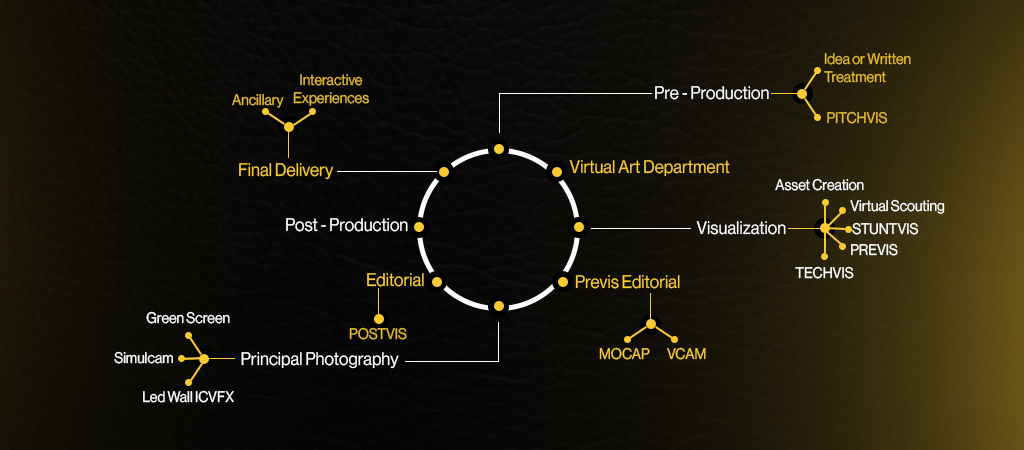
Why Video Production Agency Teams Embrace This Shift
Suddenly, expertise blends. Filmmakers learn tools from game design. Digital artists join photographers on set. Storyboarding moves into live demos. Agencies expand thinking. According to a report from Altman Solon, industry experts surveyed were already using virtual production for 40% of their projects at the time.
That growth brings real benefits:
- Directors preview scenes in advance
- Clients watch full composite early
- Creativity happens at speed
- Revisions happen on the spot
That kind of clarity changes everything. Shots move faster. Budgets stay under control. Campaigns finish without surprise delays. The growth in commercial video production services keeps evolving. Expectations rise. Agencies that move early gain an advantage. Creativity stays agile. Control stays tight.
How Remote Video Production Connects Through Virtual Sets
Distance stops mattering. Production teams go digital across borders. Directors watch shoots live from another continent. Clients review on their laptops. Feedback travels instantly. That kind of workflow feels futuristic. Yet it is happening now. Remote video production no longer means compromise. It means global collaboration. Real-time feedback. Creative alignment across time zones.
Digital walls become shared canvases. Camera feeds get streamed. Scenes remain editable mid-shoot. Mistakes get corrected on the fly. Everyone remains synchronized. That flexibility shapes client expectations. Teams stay global. Campaigns launch faster. Work becomes borderless. Virtual production powers that shift.
Why Virtual Production Saves Money
At first glance, building digital stages feels expensive. Yet cost analysis tells a different story. Location travel disappears. Gear rental shrinks. Shoot days drop. Post‑production lightens. Here is how the economics shift:
- No travel or location permits
- Smaller crews on set
- Shorter production schedules
- Minimal VFX in post
- Fewer reshoot days
That builds long‑running advantages. Digital sets get reused across projects. Lighting remains consistent. Creative direction stays aligned. Budgets stretch further. That is what modern video production solutions gain. Film budgets drop. Visual quality stays cinematic. Delivery becomes faster.
Challenges Worth Noting
This tech feels powerful. Yet learning curves are real. Teams face hurdles at first. Because every process has its own set of challenges. Common bumps include:
- Optimizing large digital environments
- Calibrating walls and camera sync
- Managing accurate reflections and lighting
- Training crew on new tools and workflows
- Keeping color pipelines tight
Mistakes are immediately on display. Creative teams learn fast. Crew roles shift. Digital talent becomes critical. Yet once systems align, shots move fluidly. And the visual payoff becomes exciting.
Adaptation speed matters. Those who learn fast gain more. Teams that master workflows gain trust. Visual storytelling grows stronger.
Endless Creative Freedom, No Geographic Limits
Boundaries fade inside virtual production. Geography no longer limits ideas. Season timing never delays shoots. Daylight remains perfect all day long. That kind of creative control opens doors. Ideas become bolder. Visuals become cinematic. Locations shift second by second. Worlds expand without cost. That is freedom.
Directors, designers, and clients think bigger. Shots feel film‑like. Budgets stay realistic. The result feels cinematic. And it all happens inside a studio.
How Virtual Production Is Changing Visual Storytelling
There’s more to virtual production than better backgrounds and faster turnarounds. It’s reshaping how stories are told, especially in commercials and branded content. This shift isn’t just technical, it’s creative. In the past, commercial shoots worked within tight visual limits. One scene, one look, one tone. That was the reality of working on location or building physical sets. Even minor changes to a shot often meant extra crew, more time, and higher costs. Ideas had to be trimmed to what could fit in the schedule or on the budget sheet.
That is no longer the case.
Now, if a director wants to switch from a bright morning to a moody twilight, it takes minutes, not hours. If a campaign calls for surreal backdrops or multiple stylized looks, they can all be built into the shoot. The set becomes a flexible, living canvas. This opens the door to new kinds of storytelling.
Camera work evolves, too. Since the digital world responds to the camera’s movement, long takes and dramatic shifts in focus feel smoother. Scenes can explore space in ways that feel more cinematic. Movement has more depth. Framing feels more purposeful. Even something as simple as a product reveal takes on a different rhythm. Rather than dropping the product into a fixed setting, directors can build a scene around it. The environment moves with the message. The result feels more like a short film than a straightforward ad.
Storyboarding also gets more exciting. It’s not just about planning what comes next. It becomes a space to test transitions, lighting cues, and emotional beats. Teams can play with ideas before filming and carry that energy onto the stage. This shift is already changing the way brands show up on screen. Visuals stick with viewers longer. Concepts feel bigger without adding cost. Stories unfold with more emotion, texture, and clarity.
Virtual production doesn’t just improve what’s seen on set. It rewrites how filmmakers think about space, time, and pace in every frame. That kind of creative control is rare…and it’s changing the visual language of commercials in real time.
What The Future Holds For Virtual Production
Change is already here. Yet more lies ahead. Video marketing trends and video editing trends to watch include:
- Smaller studios with display panels for boutique budgets
- AI tools building digital environments fast
- Environment marketplaces for dynamic brand worlds
- Interactive sets responding to performance
- Modular rigs that move to on-location shoots
Visualization evolves. Tools become accessible. Expectations rise. Storytelling climbs higher. Boundaries keep dissolving. In a few years, a brand shoot may happen in a suitcase. Virtual worlds unfold anywhere. Creativity travels light. Production feels mobile. Yet visuals remain cinematic.
What This Means For Filmmakers, And Production Teams
Virtual production is more than jargon. It is an evolution of filmmaking. Brands, agencies, and creatives are stepping into live digital storytelling. Visual ambition meets practical workflow. Teams stay lean, ideas stay bold.
That change spreads from Hollywood cinematography into everyday brand content. Commercial cinematography becomes more dynamic. Video production agency teams become agile. Commercial video production services deliver filmic impact. Remote video production becomes key.
The studio lights glow differently now. The future feels digital. And film feels limitless.